Τμήμα Ωκεανογραφίας και Θαλασσίων Βιοεπιστημών

ICHTHYOLOGY, AQUACULTURE AND FISH DISEASES
Ichthyology, Aquaculture
and Fish Diseases
The sea has always been a source of high quality food for humans originating from fishing and according to many scientists, this high quality food contributed positively to the evolution of the human brain. Unfortunately, through the ages, the intensification of fishing methods, the intensification of human activities and climatic change have led to reduction of wild fish stocks, habitat destruction, marine pollution and ecosystem alterations.
Globally, as a result of the above, a reduction of the quantity of fish from fishing and a continuous increase of aquaculture products is observed. In parallel, the earth’s population is continuously growing along with the demand for more food originating from the sea. The production of food originating from animals either from the land or the internal waters has reached maximum capabilities with no further ability of growth. To cover this ever growing gap of food demand we need to direct our efforts to the sea, since it is the least exploited resource of our planet in respect to food production.
The aquaculture sector is the fastest growing food producing sector globally. It grows by 8.8% each year since the 50’s and today contributes 50% of the globally consumed fish and fish products (FAO, 2008). It is estimated that by 2030, aquaculture production will cover the remaining 50% that originates from fisheries (FAO, 2004).
Aquaculture production has to be practiced in a responsible manner in respect to environmental impacts and since it is still depends on natural production to find primary materials for the production of fish feeds, has to be operated in a sustainable manner. The organization of aquaculture activities in Locations of Organized Aquaculture Development is a recent tool that reduces the conflict of use of coastal areas for other human activities and permits a more holistic management approach, environmental, ecological and productive.
Main focuses in this research working group are ichthyology, as a tool for the scientist to receive an insight of fish as organisms in a systematic, classification, functional and behavioral manner, aquaculture, providing updated research subjects on various aspects of the culture of marine organisms and fish diseases, being a key important aspect of intensively cultivated organisms.


- Ichthyology
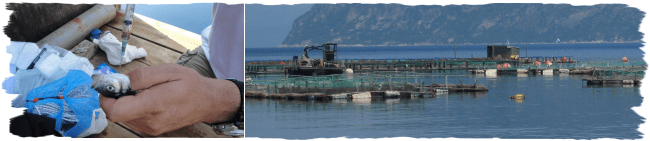
The fishes are the most numerous and diverse of the vertebrate groups and through an amazing variety of behavioural, morphological and physiological adaptations they dominate the aquatic systems of the world. The study of fish extend beyond traditional areas, such as distributional, anatomical and systematic studies, to examine ways in order to improve and manage fisheries or aquaculture operations, to use fish as models in order to test ideas/theories in ecology, evolution, behaviour and physiology. Furthermore the fish are used as models in medical research and as indicators in order and to determine the effects of human activities on aquatic environments. Research of our team, in under- and postgraduate level (M.Sc. and PhD) is focused on feeding and reproductive behaviour of the fish and their functional morphology, fisheries, fish ethology, investigation of fish fauna diversity, length-weight relationships, age and growth studies, fish invasions, discriminations of fish populations and parasites of fishes, to name some of them.
- Aquaculture
The cultivation of marine productive animals, such as fish, cephalopods, bivalve molluscs, etc., represents an important primary activity of our country requiring scientific support in many areas such as fish husbandry, animal selection, breeding, nutrition and feeding, the final product offered to the consumer and many more. Research of our team, in under- and post-graduate level (M.Sc. and PhD) is focused on fish reproduction, fish nutrition and feeding, and final product, such as development of methods for the detection of histamine in fish and fish products, changes that occur on the organoleptic characteristics and the components of fish flesh after freezing, health and safety of fish and fish products, the effect of the reduction of feeding ratio on feed utilization and production cost, improvement of the formula for the calculation of feeding ratio and the prediction of growth for cultivated fish, new species cultivation (octopus), the effect of commercial feeds on the quality of fish eggs, recycling of organic matter by organisms that can be used in fish feeds, production of algae and incorporation in fish feeds as growth promoters, to name some of them.
- Fish Diseases
Diseases of cultivated fish represent a discrete and important research field and concerns the epidemiology of diseases for the cultivated fish, the analysis of pathogenic microorganisms, the production of vaccines and the study of the protection conferred against infectious agents such as viruses and bacteria. Research of our team, in both under- and post-graduate level (M.Sc. and PhD), relates more specifically to the production of experimental vaccines for fish diseases and the investigation of the protection conferred to vaccinated fish in comparison to commercially available vaccines, comparison of the protection conferred after various routes of vaccine administration, investigation of the protection conferred by new commercial vaccines applied in large scale in the field, development of methods for experimental infections, development-improvement and standardization of immunological assays (ELISA) for the detection-identification and quantitation of antigens of pathogens and measurement of specific immune responses in vaccinated fish, utilization of histochemistry for the investigation of the response of marine animals to the infection with pathogens, histochemical and immunohistochemical analysis of the infection of marine animals from bacteria and viruses, analysis of microorganisms with electrophoresis and antigenic analyses by Western blot, to name some of them.
- Academic and Research staff
- Infrastructure
- Research projects
- Publications
- Scientific cooperation
Labοratory Director

Bakopoulos Vasileios
Veterinarian | Professor | Labοratory Director
- Isolation and characterization of pathogenic microorganisms from fish.
- Production of monoclonal antibodies against pathogenic bacteria and immunoglobulins.
- Production of bacterial cells and bacterial products for the production of vaccine mixtures.
- Vaccination and control of the immune response to the vaccine and the protection provided after experimental infections.
- Study of the mechanisms of immunopathogenesis of bacterial and viral infections of marine farmed organisms.
- Genetic improvement of farmed aquatic organisms in relation to disease resistance.
Personnel
Pappou Sofia
Marine BioScientist / Post-doctoral researcher | Scientific assistants
- Exploitation of marine organisms using biotechnology
- Enrichment of fish feed and enhancement of aquaculture using new sustainable resources
Academic staff

Batjakas Ioannis E.
Ichthyologist | Associate Professor
PhD Candidates
Valsamidis Michael-Aggelos
Marine Scientist, MSc/PhD Candidate
- The effect of climate change on the phenotype and virulence of fish pathogens
Kounida Sevasti-Aliki
- Haematological and biochemical studies on fish
Infrastructure
The research facilities described below, concern the institutionalized Laboratory of Ichthyology-Aquaculture and Diseases of Aquatic Organisms with the acronym ICHTHYAI (Government Issue 1255/28-04-2016). ICTHYAI has been granted all the necessary licenses and code numbers (EL83 BioExp 01) for performing experiments on aquatic organisms, according to the PD 56/2013 and the Directive 2010/63/EC (decision No. 4053/14-03-2017). The experimental protocol has been approved according to the decison No. 5379/04-04-2017. The research infrastructure includes:
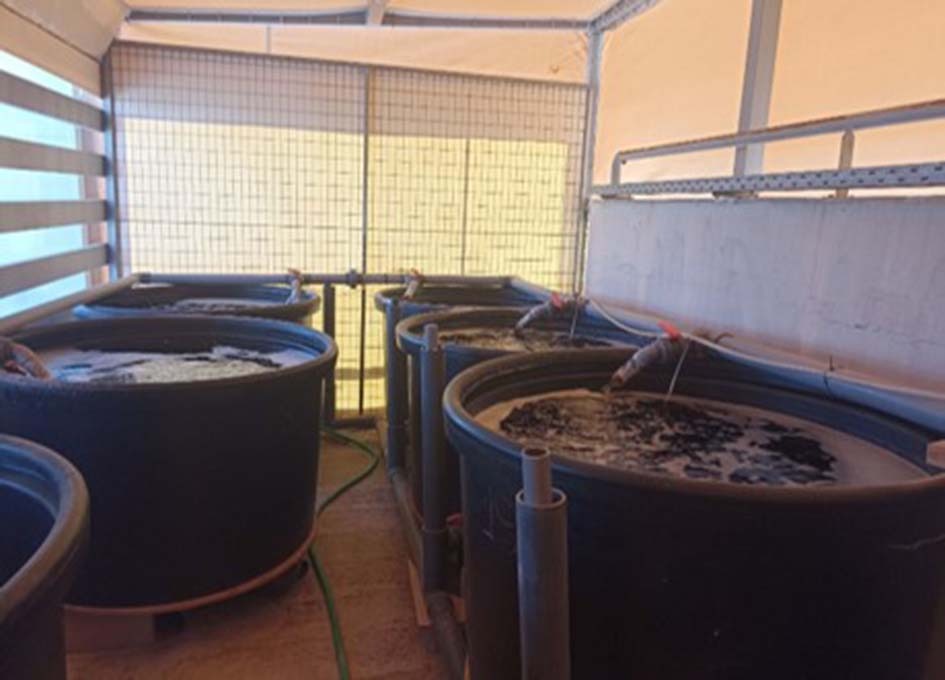
WET AQUACULTURE, FISH DISEASES & ICHTHYOLOGY LAB
- Two closed fully recycled marine water tank systems with a capacity of 16m3 with water pumps, sand filter, biological filter, air pumps and UV water sterilization apparatus.
- A closed fully recycled marine water aquaria system with a capacity of 350l with water and air pumps and filter-biological filter.


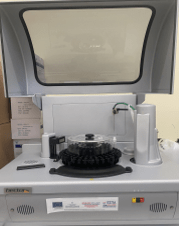
AQUACULTURE, FISH DISEASES & ICHTHYOLOGY LAB
- Freezer -20οC, Freezer -85οC, refrigerators
- Fume cupboard, Microbiology cabinet
- Liquid stirrer, Liquid reactions apparatuses
- Cooled and warm incubators, water bath
- Cooled centrifuge, microcentrifuge
- Microplates Washer and photometer
- Autoclaves
- UV-visual Photometers
- Bacterial colonies counter
- Elektrophoresis (horizontal & vertical), transblot and accompanying power apparatuses.
- Balances, hot plate-stirrer
- Microtome
- PCR & RT-PCR
- System for photography
- Microscopes
- Hematological & Biochemical analyzers
Research projects
FISHSAT | Migration assessment model for medium and large pelagic species in the Aegean based on the distribution of fishing effort and the environmental parameters that affect it, with the help of satellite images.
2006-2008. Coordinator: Dept. of Marine Sciences, University of the Aegean.
| J. Batjakas | Member of the research group and participation in drafting the interim and final report |
| Funding: | Fisheries Directorate of the Ministry of Agriculture |
Preliminary study of the biology of Octopus (Octopus vulgaris) in Lesvos island (at the straits of Mytilene)
, 2008-2009. Coordinator: Dept. of Marine Sciences, University of the Aegean.
| J. Batjakas | Member of the research group and participation in drafting the interim and final report |
Study of the Oceanographic and Fishery characteristics in the sea around the island of Psara & Preliminary management plans for a protected area-marine park.
2008-2009. Coordinator: Dept. of Marine Sciences, University of the Aegean.
| J. Batjakas | Member of the research group and participation in drafting the interim and final report |
| Funding: | Prefecture of Chios |
Analysis of the immunopathology mechanisms in natural and experimental infections of fish with Nodavirus: importance of the infection for public health.
Programme «ΘΑΛΗΣ», 2012-2015, Coordinator: Department of Veterinary Medicine, University of Thessaly. Project No. 4501.
| V. Bakopoulos | Member of the main research team |
| Funding: | Ministry of Education |
Training efficiency of the employees in the fish department of I. & S. Sklavenitis S.A. on fish food health and safety. 2013
| V. Bakopoulos | Scientific Responsible |
| Funding: | Private Company funds |
Management Measures for Fisheries in the Marine Protected Area of the National Marine Park of Zakynthos.
2012-2013. EU Project MED, MedPAN North
| V. Bakopoulos | Scientific Responsible |
Management Measures for Fisheries in the Marine Protected Area of the National Marine Park of Sigri.
2012-2013. Coordinator: Dept. of Marine Sciences, University of the Aegean.
| J. Batjakas, V. Bakopoulos | Members of the research group, data processing and analysis; participation in drafting the interim and final report |
| Funding: | Museum of Natural History of the Lesvos Petrified Forest |
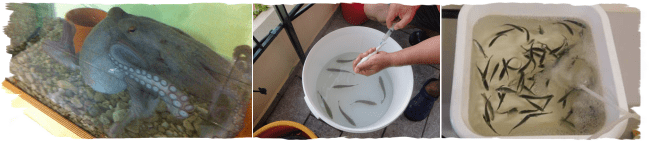
Comparison of two injectable bivalent (Vibrio-Photobacterium) commercial vaccines in field conditions
| V. Bakopoulos | Coordinator & Scientific responsible |
| Funding: | AQUA VET S.A. |
Study of the hygiene status of Kalloni Bay, Lesvos
| V. Bakopoulos | Coordinator & Scientific responsible |
| Funding: | Region of North Aegean |
Use of antimicrobial substances for the prevention and treatment of common diseases of cultivated fish and assessment of their efficacy and safety.
«Cooperation 2011» Programme. Ministry of Education and General Secretariat of Research and Technology. Coordinator: Department of Veterinary Medicine, University of Thessaly. Project No.: 11ΣΥΝ_3_147.
| V. Bakopoulos | Member of the main research team |
| Funding: | General Secretariat of Research and Technology |
Comparison of The Efficacy of available vaccines against Nodavirus
| V. Bakopoulos | Coordinator & Scientific responsible |
| Funding: | Aqua Vet S.A, Cephalonia Aquaculture and Galaxidi Aquaculture S.A. |
Genetic Improvement of sea bass and bream – Disease Resistance
| V. Bakopoulos | Coordinator & Scientific responsible |
| Funding: | Nireus S.A. |
Vaccination trials on sea bass against Pasteurellosis and Vibriosis
| V. Bakopoulos | Coordinator & Scientific responsible |
| Funding: | FATRO S.P.A., Italy |
Εμβολιακές δοκιμές στο λαβράκι έναντι της παστερέλλωσης και της δονακίωσης
| Β. Μπακόπουλος | Συντονιστής και Επιστημονικός Υπεύθυνος |
| Χρηματοδότηση: | FATRO S.P.A., Ιταλία |
Center for the Study and Sustainable Exploitation of Marine Biological Resources – CMBR
| V. Bakopoulos | Coordinator and Scientific Responsible for the objectives by University of The Aegean |
| Funding: | Ministry of Economy |
Development of a PCR array for the detection of differential expressed genes associated with resistance of sea bass to b-nodavirus nervous necrosis, with potential of commercial exploitation
| V. Bakopoulos | Coordinator and Scientific Responsible |
| Funding: | Ministry of Agriculture, EPALth 2014-2010 |
Effect of climate change on the virulence of pathogens and the physiology of sensitive aquatic organisms hosts
| V. Bakopoulos | Coordinator and Scientific Responsible |
| Funding: | Ministry of Education |
Genetic Improvement of sea bass and bream – Disease Resistance II
| V. Bakopoulos | Coordinator & Scientific responsible |
| Funding: | Nireus S.A. |
Publications
Kampouris, T.E., Porter, J.S. and Sanderson, W.G. (2019). Callinectes sapidus Rathbun, 1896 (Brachyura: Portunidae): An assessment on its diet and foraging behaviour, Thermaikos Gulf, NW Aegean Sea, Greece: Evidence for ecological and economic impacts. Crustacean Research, in press.
Kampouris, T.E., Tiralongo, F. and Batjakas, I.E. (2019). First record of Didogobius schlieweni Miller (Perciformes, Gobiidae) in Eastern Mediterranean Sea. aqua International Journal of Ichthyology, 25(1), pp.13-16.
Bakopoulos V., Palaiologos A., Poulos K., Malatestas K., Dimitrakopoulou E., Spinos E., Kokkoris G.D. (2018). Efficacy testing of anti-VNN vaccine formulations against the RGNNV b-nodavirus genotype in European sea bass (Dicentrarchus labrax). 3rd International Congress on Applied Ichthyology & Aquatic Environment, Hydromedit 2018, Volos, Greece, 8-11 November 2018
Bakopoulos V., Palaiologos A., Kantham P., Kottaras L., Kyvelou V., Dimitroglou A., Kakava E., Papaharisis L., Kokkoris G.D. (2018). Selective breeding and disease resistance of sea bass, Dicentrarchus labrax, against viral nervous necrosis. 3rd International Congress on Applied Ichthyology & Aquatic Environment, Hydromedit 2018, Volos, Greece, 8-11 November 2018.
Bardanis E, Batjakas I, Maragoudaki, Paspatis (2018). Population density of Holothurians in Gera Gulf, Lesvos Island, Greece.12th Panhellenic Symposium of Oceanography & Fisheries, Corfu, Greece, pp: 49
Giagkatzoglou Z, Anastasiadou C, Gubili C, Liasko R, Kamidis N, Papathanasiou V, Batjakas, I.E. (2018) Reproductive traits of the endemic Mediterranean Hippolyte sapphica (Caridea: Hippolytidae) across its Greek geographical range. 12th Panhellenic Symposium of Oceanography & Fisheries, Corfu, Greece, pp: 42
Giovos, I., Batjakas, I., Doumpas, N., Kampouris, T.E, Poursanidis, D. and Paravas, V. (2018). The current status of lionfish invasion in Greece and future steps towards control and mitigation. In: M. Huseyinoglu and B. Ozturk, ed., Lionfish Invasion and Its Management in the Mediterranean Sea, 1st ed. [online] Istanbul: Turkish Marine Research Foundation, pp.17-33. Available at: http://tudav.org/en/our-fields/publications/books/
Kampouris, T.E. (2018). Blue Growth as a tool for sustainable fisheries management of threatened fisheries resources. A case study of the spiny lobster fishery off Aegean Sea. In 9th International Black Sea Symposium, Blue Growth as a driver for regional development, Athens, pp. 22-26.
Kampouris, T.E. and Batjakas, I.E. (2018). The northernmost record of the thermophilic Mediterranean parrotfish Sparisoma cretense (Linnaeus, 1758) (Perciformes, Scaridae) in the eastern Mediterranean Sea (northwestern Aegean Sea). Annales, Series Historia Naturalis, 28(2), pp.111-116.
Kampouris, T.E., Chatzinikolaou, A.T., Zambelis, A.C. and Batjakas, I.E. (2018). Aquaculture: the offshore challenge in EU and Greece. In ECHOPOLIS INTERNATIONAL 2018 Nature and culture-based strategies and solutions for cities and territories: an idea whose time has come! 26-28 November 2018, Athens, pp.45.
Kampouris, T.E., Giovos, I., Doumpas, N., Stergioti, A. and Batjakas, I.E. (2018). First record of Penaeus pulchricaudatus (Stebbing, 1914) and the establishment of P. aztecus, (Ives, 1891) and P. hathor (Burkenroad, 1959) in Cretan waters, Greece. Journal of the Black Sea / Mediterranean Environment, 24(3), pp.199-211.
Kampouris, T.E., Kouloumperis, V. and Batjakas, I.E. (2018). First documented record of the Palaemonid shrimp Brachycarpus biunguiculatus (Lucas, 1846) (Decapoda, Caridea, Palaemonidae) from Aegean Sea, Greece. Spixiana, 41(2), p.188.
Kampouris, T.E., Kouroupakis, E., Lazaridou, M. and Batjakas, I.E. (2018). Length-weight relationships of Squilla mantis (Linnaeus, 1758) (Crustacea, Stomatopoda, Squillidae) from Thermaikos Gulf, North-West Aegean Sea, Greece. International Journal of Fisheries and Aquatic Studies, 6(6), pp.241-246.
Kampouris, T.E., Milenkova, D. and Batjakas, I. (2018). On the Finding of the Rare Crab Paragalene longicrura (Nardo, 1868) (Crustacea, Decapoda, Brachyura, Progeryonidae) from Thermaikos Gulf, Northwest Aegean Sea, Greece. Fishes, 3(3), 30.
Kampouris, T.E., Tiralongo, F., Golemaj, A., Giovos, I., Doumpas, N. and Batjakas, I.E. (2018). Penaeus aztecus Ives, 1891 (Decapoda, Dendrobranchiata, Penaeidae): On the range expansion in Sicilian waters and on the first record from Albanian coast. International Journal of Fisheries and Aquatic Studies, 6(4), pp.468-471.
Kampouris, T.E., Zambelis, A.C. and Batjakas, I.E. (2018). Large scale offshore fish farm in Greece by using submerged cages, the case of Holy & Great Monastery of Vatopedi, Mount Athos North Aegean Sea. In (Panagiotis Berillis and Ioannis Karapanagiotidis editors), 3rd International Congress on Applied Ichthyology & Aquatic Environment 8-11 November 2018, University of Thessaly – School of Agricultural Sciences, Department of Ichthyology and Aquatic Environment Volos, pp. 118-120.
Keramidas, I., Doumpas, N., Kleitou, P., Tiralongo, F., Bernardi, G., Romanidis-Kyriakidis, G., Marmara, D., Kampouris, T.E. and Giovos, I. (2018). Is it Alien to you?? Share it!!: Citizen scientists monitoring Non-Indigenous species in Greece. In (Karachle PK, Loukaidi V, Kanellopoulos ThD, Gerovasileiou V, Strogyloudi E, Papadopoulou K-N, Gkouvousi A, Trachalakis P, Arvanitidis C editors) 12th Panhellenic Symposium of Oceanography & Fisheries 30 May – 3 June 2018, Corfu, pp.210.
Tzoraki O., Monioudi I., Tourlioti P., Velegrakis A.F., Krasakopoulou E., Jorda-Capdevila D., Thibault D. , Hasiotis Th. , Batjakas J., Bakopoulos V., Efstratiou A. (2018) Ecosystem service protocols for coastal zone management- A transdisciplinary dialogue. Proceedings of the 3rd International Congress on Applied Ichthyology & Aquatic Environment. Volos, Greece, 8-11 November, pp: 586-592.
Spinos E., Ramfos A., Poulos K., Bakopoulos V., Palaiologos A., Katselis G. (2018). Microbiological study in aquaculture farms of Argostoli Gulf. 3rd International Congress on Applied Ichthyology & Aquatic Environment, Hydromedit 2018, Volos, Greece, 8-11 November 2018.
Spinos E., Gerakis A., Palaiologos A., Bakopoulos V. (2018). Effects of temperature and salinity on outbreaks of bacterial diseases of farmed sea bass Dicentrarchus labrax ((Linnaeus, 1758). 3rd International Congress on Applied Ichthyology & Aquatic Environment, Hydromedit 2018, Volos, Greece, 8-11 November 2018.
V. Bakopoulos, D. White, M-A. Valsamidis, F. Vasilaki (2017). Experimental infection of Octopus vulgaris (Cuvier, 1797) with Photobacterium damsela subsp. piscicida.Immunohistochemical tracking of antigen and tissue responses. Journal of Invertebrate Pathology 144, 24-31. (http://dx.doi.org/10.1016/j.jip.2017.01.008).
E. Spinos, G.D. Kokkoris, V. Bakopoulos (2017). Prevention of sea bass (Dicentrarchus labrax, L. 1758) photobacteriosis and vibriosis. Long term efficacy study of intraperitoneally administered bivalent commercial vaccines. Aquaculture 471, 172–184.
V. Bakopoulos, I. Karoubali, A. Diakou (2017). Parasites of the Lessepsian invasive fish Lagocephalus sceleratus (Gmelin 1789) in the eastern Mediterranean Sea, Journal of Natural History 51(7-8), 421-434, DOI:10.1080/00222933.2017.1279690
Bakopoulos V., Nikolaidis A., Kolygas M., Athanassopoulou F. (2017). Contribution to the parasites and associated pathology of wild Serranidae from the Aegean Sea. Journal of the Hellenic Veterinary Medical Society, in press.
Bakopoulos, V., Tsepa, E., Diakou, A., Kokkoris, G., Kolygas, M.N., Athanassopoulou, F. (2017). Parasites of Scyliorhinus canicula (Linneus, 1758) in the northeastern Aegean Sea. Journal of the Marine Biological Association of the United Kingdom, doi:10.1017/S0025315417001552.
Bakopoulos, V., Kosma I., Laspa E. (2017). Quantitative and qualitative analysis of sea bream, Sparus aurata (L.), humoral immune response, vaccinated with commercial and experimental vaccines against vibriosis and photobacteriosis. Journal of the Marine Biological Association of the United Kingdom, doi:10.1017/S0025315417001631.
Chalazas Th., Tzoraki O., Cooper D., Efstratiou A., Bakopoulos V., 2017, Ecosystem service evaluation of streams for nutrients and bacteria purification of a pastureland watershed, Fresenius Environmental Bulletin Journal, Parlar publisher, Volume 26, No. 12A/2017 pages 7849-7859.
Corsini-Foka, M., Mastis, S., Kondylatos, G. and Batjakas, I. (2017). Alien and native fish in gill nets at Rhodes, eastern Mediterranean (2014–2015). Journal of the Marine Biological Association of the United Kingdom, 97(03), pp.635-642.
Evangelopoulos, A., Batjakas, I. and Koutsoubas, D. (2017). Length–weight relationships of 9 commercial fish species from the North Aegean Sea. Acta Adriatica, 58(1), pp.187-192.
Kondylatos, G., Kampouris, T.E., Kouloumperis, V. and Corsini-Foka, M. (2017). The Indo-Pacific brachyuran Charybdis (Gonioinfradens) paucidentatus(A. Milne-Edwards, 1861) (Brachyura, Portunidae) in the Cyclades, Aegean Sea. Turkish Journal of Zoology, 41(6), pp.1118-1120.
Ioanna Kosma, Evita Laspa, Vasileios Bakopoulos (2016). Quantitative & Qualitative analysis of sea bream, Sparus aurata (L.), humoral immune response, vaccinated with commercial and experimental vaccines against Vibriosis and Photobacteriosis. 51st European Marine Biology Symposium Rhodes, Greece, 26-30 September 2016.
Chalazas Th., Tzoraki O., Cooper D., Efstratiou A., Bakopoulos V. (2016). Ecosystem service evaluation of streams for nutrients and bacteria purification of a pastureland watershed. 4th Hellenic Conference ENVECON 4-5 November 2016, University of Thessaly, Volos, Greece.
Gubili, C., Macleod, K., Perry, W., Hanel, P., Batzakas, I., Farrell, E., Lynghammar, A., Mancusi, C., Mariani, S., Menezes, G., Neat, F., Scarcella, G. and Griffiths, A. (2016). Connectivity in the deep: Phylogeography of the velvet belly lanternshark. Deep Sea Research Part I: Oceanographic Research Papers, 115, pp.233-239.
Veríssimo, A., Zaera-Perez, D., Leslie, R., Iglésias, S., Séret, B., Grigoriou, P., Sterioti, A., Gubili, C., Barría, C., Duffy, C., Hernández, S., Batjakas, I. and Griffiths, A. (2016). Molecular diversity and distribution of eastern Atlantic and Mediterranean dogfishes Squalus highlight taxonomic issues in the genus. Zoologica Scripta, 46(4), pp.414-428.
Bakopoulos, V., Nikolaou, I., Laspa, E., Kosma, I. and Spinos, E. (2015). Humoral response of sea bass Dicentrarchus labrax L. after intraperitoneal immunization with commercial and experimental vaccines. 11ο Πανελλήνιο Συμπόσιο Ωκεανογραφίας & Αλιείας, 13-17 Μαΐου 2015, Μυτιλήνη, Λέσβος, Ελλάδα.
Batjakas, I.E., Kampouris, T.E. and Papadas, A. (2015). First Record of the African Surgeonfish Acanthurus monroviae (Osteichthyes: Acanthuridae) In the Hellenic Waters. Journal of Aquaculture & Marine Biology, 2(6).
Papadimitriou T., I. Kagalou, V. Bacopoulos & I.D. Leonardos (2010). Accumulation of microcystins in water and fish tissues: An estimation of risks associated with microcystins in most of the Greek Lakes. Environmental Toxicology 25(4), 418427.
Bakopoulos V., A. Adams & R.H. Richards (1995). Some biochemical properties and antibiotic sensitivities of Pasteurella piscicida isolated in Greece and comparison with strains from Japan, France and Italy. Journal of Fish Diseases 18, 1-7.
Bakopoulos V., A. Adams & R.H. Richards (1997). The effect of iron limitation growth conditions on the cell and extracellular components of the fish pathogen Pasteurella piscicida. Journal of Fish Diseases 20(4), 297-305.
Bakopoulos V., A. Adams & R.H. Richards (1997). Production and characterization of monoclonal antibodies against Pasteurella piscicida, the causative agent of fish pasteurellosis. Journal of Fish Diseases 20(4), 307-315.
Bakopoulos V., A. Adams & R.H. Richards (1997). Serological relationship of Photobacterium damsela subsp. piscicida isolates (the causative agent of fish Pasteurellosis) determined by western blot analysis using six monoclonal antibodies. Diseases of Aquatic Organisms 28, 69-72.
Bakopoulos V., Z. Peric, H. Rodger, A. Adams & R.H. Richards (1997). First report of fish Pasteurellosis from Malta. Journal of Aquatic Animal Health 9, 26-33.
Bakopoulos V., Volpatti D., Adams A., Galleotti M. & Richards R.H. (1997). Qualitative differences in the immune response of rabbit, mouse and sea bass, Dicentrarchus labrax, L, to Photobacterium damsela subsp. piscicida, the causative agent of fish Pasteurellosis. Fish and Shellfish Immunology 7, 161-174.
Bakopoulos V., Volpatti D., Papapanagiotou E., Richards R.H., Galeotti M. & Adams A. (1997). Development of an ELISA to detect Pasteurella piscicida in culture and in “spiked” fish tissue. Aquaculture, 156(3/4), 359-365.
Bakopoulos V., A. Adams, M. Galeotti & G.J. Dimitriadis (2000). In vitro growth inhibition studies of Photobacterium damselae subspecies piscicida, using various antibodies. Bulletin of The European Association of Fish Pathologists 20 (6), 237-243.
Bakopoulos V., K. Poulos, A. Adams, M. Galeotti & G. J. Dimitriadis (2002). The effect of novel growth media on the virulence and toxicity of cellular and extracellular components of the fish pathogen Photobacterium damsela subsp. piscicida. Bulletin of the European Association of Fish Pathologists 22 (4), 272-279.
Bakopoulos V., M. Pearson, D. Volpatti, L. Gousmani, A. Adams, M. Galeotti and G. J. Dimitriadis (2003). Investigation of media formulations promoting differential antigen expression by Photobacterium damsela subsp. piscicida and recognition by sea bass, Dicentrarchus labrax, (L.), immune sera. Journal of Fish Diseases 26(1), 1-13.
Bakopoulos V., D. Volpatti, L. Gusmani, M. Galeotti, A. Adams, G.J. Dimitriadis (2003). Vaccination trials of sea bass, Dicentrarchus labrax (L.), against Photobacterium damsela subsp. piscicida, using novel vaccine mixtures. Journal of Fish Diseases 26(2), 77-90.
Bakopoulos V., Hanif A., Poulos K., Galeotti M., Adams A. & Dimitriadis G.J. (2004). The effect of in vivo growth on the cellular and extracellular components of the marine bacterial pathogen Photobacterium damsela subsp. piscicida. Journal of Fish Diseases 27, 1-13.
Poulos C., V. Bakopoulos, V. Zolota & G.J. Dimitriadis (2004). Histopathological findings after sea bass (Dicentrarchus labrax L.) exposure to extracellular products of Photobacterium damsela subsp. piscicida produced in vivo. Aquaculture Research 35 (10), 931-936.
Hanif A., V. Bakopoulos, G.J. Dimitriadis (2004). Maternal transfer of humoral specific and non specific immune parameters to sea bream (Sparus aurata) larvae. Fish & Shellfish Immunology 17 (5), 411-435.
Hanif A., V. Bakopoulos, I. Leonardos, G.J. Dimitriadis (2005). The effect of sea bream (Sparus aurata) broodstock and larval vaccination on the susceptibility by PPhotobacterium damsela subsp. piscicida and on the humoral immune parameters. Fish & Shellfish Immunology 19 (4), 345-361.
Bakopoulos V. & V-C. Ksidia (2013). Pontobdella muricata infection of Raja clavata and Dasyatis pastinaca off the coast of Lesvos, Greece. Journal of the Marine Biological Association of the United Kingdom, published online June 2013, doi:10.1017/S0025315413000830.
Bakopoulos, I. Nikolaou, N. Kalovyrna, E. Amirali, G. Kokkoris and E. Spinos (2015). Prevention of fish photobacteriosis. Comparison of the efficacy of intraperitoneally administered commercial and experimental vaccines. Mediterranean Marine Science 16(2), 385-392.
Spinos E, Vavasis Χ. Bakopoulos V. (2013). First results of correlation of water temperature with clinical signs development of the encephalopathy-retinopathy virus in cultured sea bass in Western Greece. 15th Panhellenic Ichthyologists Conference. Aquatic Ecosystems: uses, effects and management. Thessalonica 10-13/10/2013.
Σπίνος Ε., Μπακόπουλος Β. (2016). Συσχέτιση της θερμοκρασίας με την εμφάνιση ασθενειών στο εκτρεφόμενο λαβράκι (Dicentrarchus labrax L. 1758) στον Κόλπο Αργοστολίου Κεφαλονιάς. 16ο Πανελλήνιο Συνέδριο Ιχθυολόγων, «Υδάτινα Οικοσυστήματα: Ορθολογική Διαχείριση – Οικονομική Ανάπτυξη», 6-9 Οκτωβρίου 2016, Καβάλα, Ελλάς.
K. Bitchava, E. Lampou, D. Bouziotis, M. Yiagnisi, D. Toubanaki, M. Margaroni, V. Bakopoulos, E. Dotsika, E. Karagouni, I. Pappas, F. Athanassopoulou (2016). Study of the impact of origanum oil us a dietary supplement in experimentally infected sea bass with Noda virus. European Aquaculture Society meeting, Edinburgh, September 2016.
Μπουζιώτης Δ., Τουμπανάκη Δ.Κ., Μαργαρώνη Μ., Μπιτχαβά Κ., Λάμπου Ε., Μπακόπουλος Β., Ντότσικα Ε., Αθανασοπούλου Φ., Καραγκούνη Ε. (2015). Διαφορική έκφραση ανοσολογικών γονίδιων σε πειραματική μόλυνση λα βρακιού με Nodavirus. 13ο Πανελλήνιο Κτηνιατρικό Συνέδριο, Αθήνα 8-10/5/2015.
Μπουζιώτης Δ., Τουμπανάκη Δ.Κ., Μαργαρώνη Μ., Γιαγνίση Μ., Λάμπου Ε., Μπιτχαβά Κ., Μπακόπουλος Β., Ντότσικα Ε., Αθανασοπούλου Φ., Καραγκούνη Ε. (2015). Διαφορική έκφραση ανοσολογικών γονιδίων σε πειραματική μόλυνση λα βρακιού με Nodavirus: ενδεχόμενη προστατευτική δράση αιθέριου ελαίου ρίγανης. 13ο Πανελλήνιο Κτηνιατρικό Συνέδριο, Αθήνα 8-10/5/2015.
Bitchava Κ., Lampou I., Yiagnisis Μ., Margaroni Μ., Toubanaki D.K., Bouziotis D., Bakopoulos V., Dotsika Ε., Karagouni Ε., Komninou Α., Pappas Ι., Athanassopoulou F. (2015). Study of the effect of the oregano essential oil as a dietary supplement on the reduce of mortality and the load of Nodavirus in an experimental infection of sea bass (D. Labrax), receiving different concentrations via food. 13ο Πανελλήνιο Κτηνιατρικό Συνέδριο, Αθήνα 8-10/5/2015.
Bouziotis D., Toubanaki D.K., Margaroni Μ., Yiagnisis Μ., Lampou I., Bitchava Κ., Bakopoulos V., Dotsika Ε., Athanassopoulou F., Karagouni Ε. (2015). The effect of Beta-nodavirus on the immune system of D. labrax: an immunological gene expression analysis. 37th Annual Conference of the Hellenic Society of Biological Sciences, Volos, May 21-23, 2015.
Μπουζιώτης Δ., Τουμπανάκη Δ.Κ., Μαργαρώνη Μ., Γιαγνίση Μ., Λάμπου Ε., Μπιτχαβά Κ., Μπακόπουλος Β. Ντότσικα Ε., Αθανασοπούλου Φ., Καραγκούνη Ε. (2015) «Επίδραση του Beta-nodavirus στο ανοσολογικό σύστημα του λαβρακιού (D. Labrax): Ανάλυση της έκφρασης ανοσολογικών γονιδίων». 37th Annual Conference of the Hellenic Society of Biological Sciences, Volos, May 21-23, 2015.
Spinos E., Bakopoulos V. (2014). Comparison of two injectable bivalent commercial vaccines (Anti-Vibrio-Photobacterium) in cultured sea bass (Dicentrarchus labrax, L. 1758). Hydromedit 2014. 1st International Congress of Applied Ichthyology & Aquatic Environment November 13th-15th, Volos, Greece
Σπίνος Ε., Καλαφάτη Χ. & Μπακόπουλος Β. Καταγραφή νεκρών και τραυματισμένων θαλάσσιων χελωνών και κητωδών στη νήσο Κεφαλονιά και εκτίμηση των αιτίων πρόκλησης ακούσιων ή εσκεμμένων θανάτων και τραυματισμών. 7ο Πανελλήνιο Συνέδριο Οικολογίας. Μυτιλήνη 9-12/10/2014
Μαρκάκης Κ., Μπατζάκας Ι. Μπακόπουλος Β. (2013). Προκαταρτική μελέτη για τη δίαιτα του είδους Scorpaena porcus (Linnaeus 1758) στο Βορειοανατολικό Αιγαίο (περιοχή Λέσβου). 15ο Πανελλήνιο Συνέδριο Ιχθυολόγων. Υδάτινα Οικοσυστήματα: χρήσεις, επιπτώσεις και διαχείριση. Θεσσαλονίκη 10-13/10/2013.
Merigot, B., I.E. Batjakas, & Y. Letourneur (2006). Fish Community structure of two Greek coastal lagoons (Lesvos Island, NE Aegean Sea): Preliminary results. Cybium, 30 (1): 79-81.
Tantanasi, I. & I.E. Batjakas (2006). Omega 3 fatty acids from fish and their effect on human health. 3rd World Congress on Quality in Clinical Practice, Thessaloniki Greece, 2006.
Morat, F., D. Banaru, B. Merigot, I.E. Batjakas, S. Betoulle, M. Vignon, R. Lecomte-Finiger & Y. Letourneur (2008). Relationships between fish length and otolith length for nine teleost fish species from the Mediterranean basin, Kerguelen Islands, and Pacific Ocean. Cybium, 32 (3): 265-269.
Leonardos, I.D, A.C. Tsikliras, I.E. Batzakas, A. Ntakis, and V. Liousia (2009). Life-history characteristics of the endangered Aristotle’s catfish (Shilurus aristotelis Garman,1890), Lake Pamnvotis, north-western Greece. J. Appl. Ichthyol., 25: 746-751.
Tantanasi, J., A. Diakou, A. Tamvakis and I.E. Batjakas (2012). Anisakis spp. burden in Trachurus trachurus. Helminthologia, 49, 1: 16-20.
Morat, F., Y. Letourneur, D. Nerini, D. Banaru and I.E. Batjakas, (2012). Discrimination of red mullet populations (Teleostean, Mullidae) along multi-spatial and ontogenetic scales within the Mediterranean basin on the basis of otolith shape analysis. Aquat. Living Resour.,25(1): 27-39.
Fletcher, N., I.E. Batjakas and G.J. Pierce (2013). Diet of the Atlantic bonito Sarda sarda (Bloch, 1793) in the Northeast Aegean Sea. J. Appl. Ichthyol., 29(5): 1030-1035.
Kampouris, T.E., I. Batjakas and I. Nikolopoulou (2013). Occurrence of oilfish Ruvettus pretiosus Cocco, 1829 (Perciformes : Gempylidae) in Chalkidiki peninsula, North Aegean Sea, Greece. J. Biol. Res. Thessalon., 19: 165-167.
Kagalou I., Papadimitriou T., Bacopoulos V. & I. Leonardos (2008). Assessment of microcystins in lake water and the omnivorous fish (Carassius gibelio, Bloch) in lake Pamvotis (Greece) containing dense cyanobacterial bloom. Environmental Monitoring & Assessment 137, 185-195.
Graduate dissertations
2012. Marneri M. Investigation of alternate methods for histamine detection.
2012. Bratakou S. Influence of freezing storage time on the organoleptic characteristics and the fat of sea bream (Sparus aurata) flesh fillets.
2012. Μarkakis Κ. Biometric and stomach contents analysis of Scorpaena porcus (Linnaeus 1758) in the N.E. Aegean Sea.
2013. Papadopoulou Α. Can we improve feeding efficiency in fish? The example of the pre-on-growing stage of a typical aquaculture unit.
2013. Ioannou G. The effect of different dietary protein levels on the growth of Seriola dumerili.
2013. Stefani Α. Feeding sea bream broodstock and its effect on egg quality.
2012. Ksidia V. The pathology of the parasitism of skates by marine leeches.
2013. Laspa Ε. Comparison of the efficacy of two commercial vaccines against photobacteriosis.
2013. Vasilaki F. Vaccination of sea bass, Dicentrarchus labrax, with an experimental vaccine against photobacteriosis inactivated with different methods.
2013. Kakourou K. & Vasileiou P. Studies on the microbial load of the cultivation environment of a marine fish hatchery.
2010. Kotsiri M.: Age and growth of Sarda sarda (Bloch, 1793) in the Aegean Sea
2010. Leoleis D.: Facts about the eating habits and the morphometry of bonito, Sarda sarda (Bloch, 1793), in the northeastern Aegean Sea
2010. Kouroupakis E.: Total composition and amino acids in wild populations of the fish species Diplodus sargus and Sciaena umbra
2009. Kyriakides S. : Morphological characteristics of the fish species Scorpaena notata (Rafinesque, 1810) from the northeastern part of Lesvos island
2009. Pantelakoy M.: A first investigation of morphological and ethological characteristics of the fish species Serranus cabrilla (Linnaeus, 1758) in the wider marine region of the island of Lesbos
2009. Nikolidakis P.: A first look at the diet of the fish, Scorpaena notata (Rafinesque 1810) in the North Eastern Aegean
2008. Panagi H.: A first investigation of morphological and ethological characteristics of the fish species Micromesistius poutassou (Risso, 1827) in the sea area North-East of the island of Lesbos
2008. Georgiou G.: Investigation and recording of certain morphological and ethological characteristics of the fish Spicara smaris (Linnaeus, 1758) in Greece and specifically in the sea area Northeast of the island of Lesbos
2008. Simeon E.: Study of the feeding behavior of Lophius budegassa (Spinola, 1807) for the sea area to the northeast of the island of Lesbos
2007. Doufeka E.: Feeding habits of Mullus barbatus, East of the island of Lesbos
2007. Dakis A.: Age and growth of the endemic and threatened fish species Silurus aristotelis Garman, 1890) in Lake Pamvotis
2007. Gerontidou P.: Study of the diet and morphology of the skate Raja clavata (Linnaeus, 1758) in the Eastern and Northeastern sea area of the island of Lesbos
2007. Tantanasi I.: Presence of Anisakis simplex as a parasite in the fish species Trachurus trachurus in the Northeastern Aegean Sea: A first approach
Post-graduate Thesis
- 2013. Kouroupakis E. Suggested intensive shripm culture of species Fenneropenaeus chinensis and Μarsupenaeus japonicus with recirculated water systems as well as a first investigation of the presence of Nodavirus in indigenous shrimp species (Melicertus kerathurus) in Greece.
- 2015. Laspa E. Comparison of the efficacy of bivalent commercial and experimental vaccines against vibriosis and photobacteriosis in sea bream Sparus aurata (L.) – Immunological analysis using ELISA.
- 2017. Mavroudi K. Effect of carbohydrates on the activity of proteases and a-amylase in 3 sections of the digestive tract (stomach, anterior and posterior gut) in young individuals of the species Sparus aurata.
PhD Thesis
- 2019. Spinos E. Correlation of environmental parameters with the occurence of diseases in intensively reared sea bass Dicentrarchus labrax, L. 1758 and prevention of these diseases.
Scientific cooperation
Partnership with other organizations:
- Hellenic Pasteur Institute
- University of Thessalonica
- Hellenic Center of Marine Research
- University of Thessaly
- University of Udine, Italy
- Selonda S.A.
- Nireus S.A.
- Cephalonian Aquaculture
- National Marine Park of Zakynthos